NVIDIA GTC Berlin 2026 is underway, and Aleria is using the week to talk about what happens after a demonstration. The conference runs October 20–22. Aleria is at booth 3054. Eric Leandri, the company’s CEO, has already taken the stage at the Public Sector Executive Forum for the panel “AI at the Point of Use.” The booth is still receiving visitors. The subject is what it takes to bring AI into production.
AI is becoming part of how institutions operate, make decisions, and deliver services. The visible tools are models and applications. The hard part is building the systems and capabilities that let those institutions use AI with control, reliability, and accountability. A model that answers a question in a meeting is not the same thing as a system an institution can run, audit, and stand behind.
On the panel, Leandri drew on Aleria’s experience deploying AI at scale in the UAE, and on the bottlenecks that slow adoption once a project has to run for real. His point for Europe was plain. Ambitions are clear. The next step is real deployments and practical outcomes. The session looked at AI at the point of use: the moment a public institution has to put the technology into a service, not into a slide.
The forum brought together public-sector executives, the people who have to carry AI into services that already have rules, records, and accountability. An institution can set an ambition and still stall on the bottlenecks Leandri described: integrating data, running the infrastructure, and keeping the result inside an environment the organization controls.
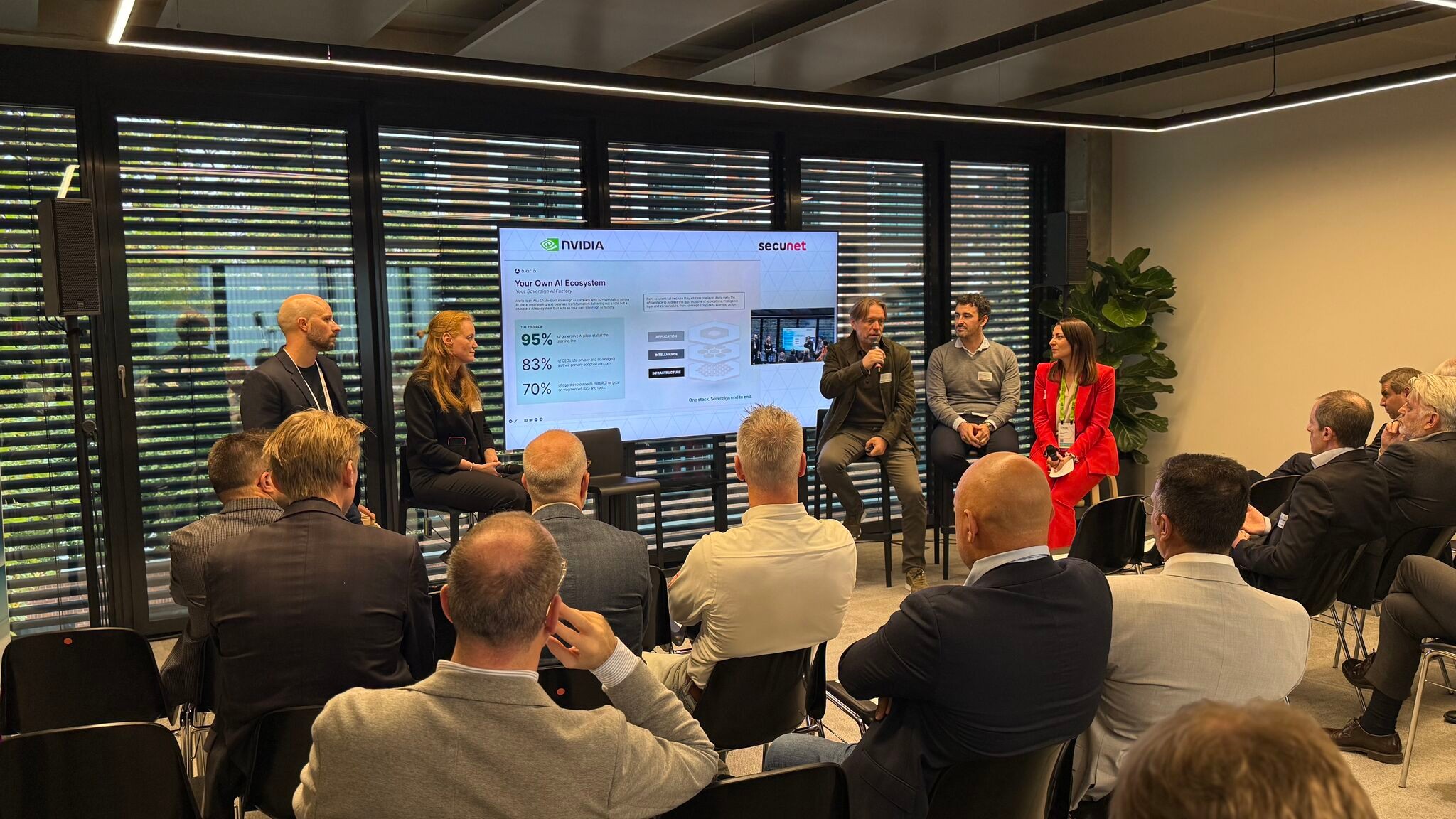
Panel at the Public Sector Executive Forum during NVIDIA GTC Berlin 2026.
That production question is also the theme at booth 3054: what it takes to build an AI factory, from computing infrastructure to intelligent applications. Aleria works across the full AI stack. The work is not only models and applications. It includes infrastructure, data integration, and the orchestration needed to build and run enterprise AI.
Visitors are shown five layers, presented as one system: infrastructure, data, models, agentic AI, and applications. Together they are meant to turn computing power into usable intelligence, inside an environment the organization controls. For public institutions, control is not a slogan. It is where the data lives, how the systems are connected, and whether the people responsible can see what the technology is doing.
Aleria is taking meeting requests during the conference at gtc.aleria.ai.
The booth conversation sits beside NVIDIA’s news on Europe’s AI factories. In a release published as GTC Berlin was in progress, NVIDIA described DSX as a full-stack reference architecture for AI factories, with compute, networking, storage, software, power, and cooling codesigned as one system. The announcement names Aleria among the cloud partners exploring the latest components of NVIDIA DSX OS to automate infrastructure lifecycle management and improve resiliency and reliability.
Aleria is among the NVIDIA Cloud Partners exploring those DSX OS capabilities and supporting the OpenShell Reference Architecture. The company is looking at the technologies for operating AI factories and for letting AI agents work securely across enterprise systems. More on what this means is coming soon.
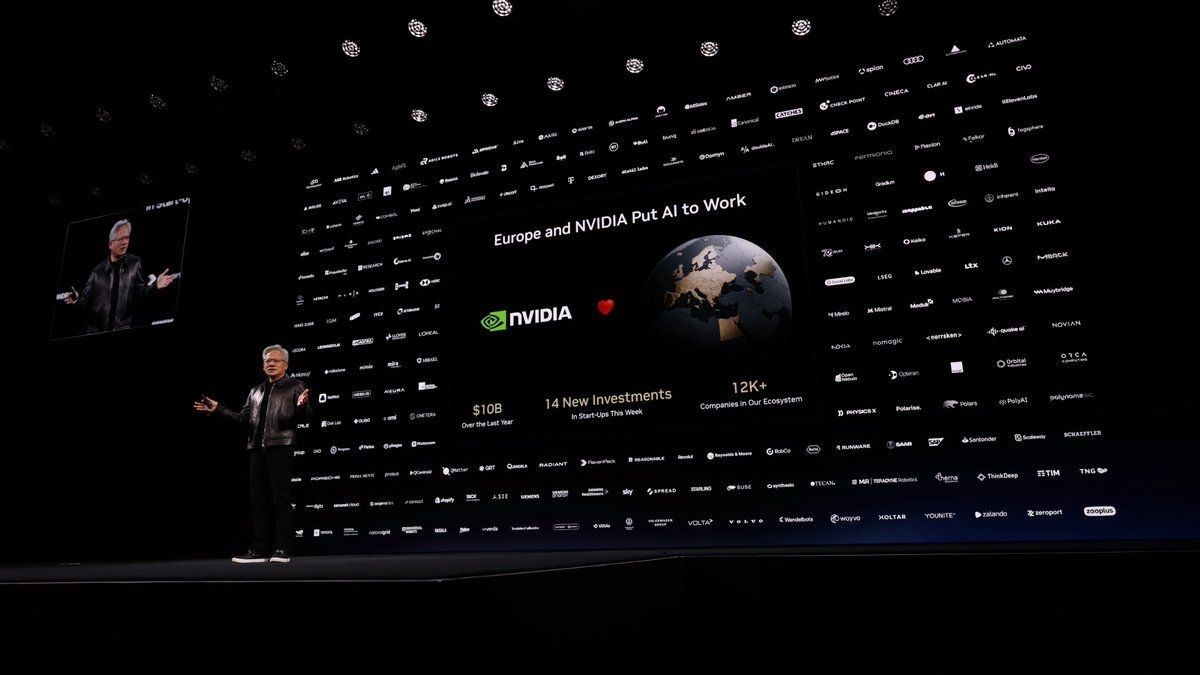
NVIDIA keynote stage at GTC Berlin 2026.
A slide on that stage displayed “$10B over the last year,” “14 new investments in start-ups this week,” and “12K+ companies in our ecosystem.” Those figures are what NVIDIA showed at its keynote. They are not Aleria figures. The stage in the photograph is NVIDIA’s, not Aleria staff.
Aleria has also posted from the conference on LinkedIn.
GTC Berlin continues through October 22. For institutions, the practical test is no longer whether AI will appear in the work. It is whether they can build the factory, from infrastructure through intelligent applications, and operate it with control, reliability, and accountability. That is the case Leandri took to the public-sector forum, and the case Aleria is making this week at booth 3054.