More computing power will not, by itself, put artificial intelligence to work. A government or a company can buy a faster system and still be unable to use it, because the hard part is running that power inside operations it controls. That is the question Aleria is putting in front of the room at NVIDIA GTC Berlin 2026.
The first day in Berlin set the terms. Conversations centered on the next generation of AI infrastructure, the rise of autonomous AI agents, and what it takes to bring AI into production at scale. Aleria's notes from day one come back to the same point: the industry is no longer short of ambition. It is short of systems that hold up once they leave the demonstration.
AI factories, and the software that has to run them
A central thread was the evolution of AI factories. NVIDIA's release on European AI factories describes technology meant to improve computing efficiency, optimize power consumption, automate infrastructure management, and strengthen operational reliability. NVIDIA is treating the factory as one system, from the facility through the software that keeps it in production.
For Aleria, led by chief executive Eric Leandri, those developments sit close to a full-stack approach: connecting infrastructure, intelligence, and applications within environments organizations control. The company is exploring NVIDIA DSX OS to advance AI infrastructure operations, and it is supporting the newly announced NVIDIA OpenShell Reference Architecture for secure AI agents.
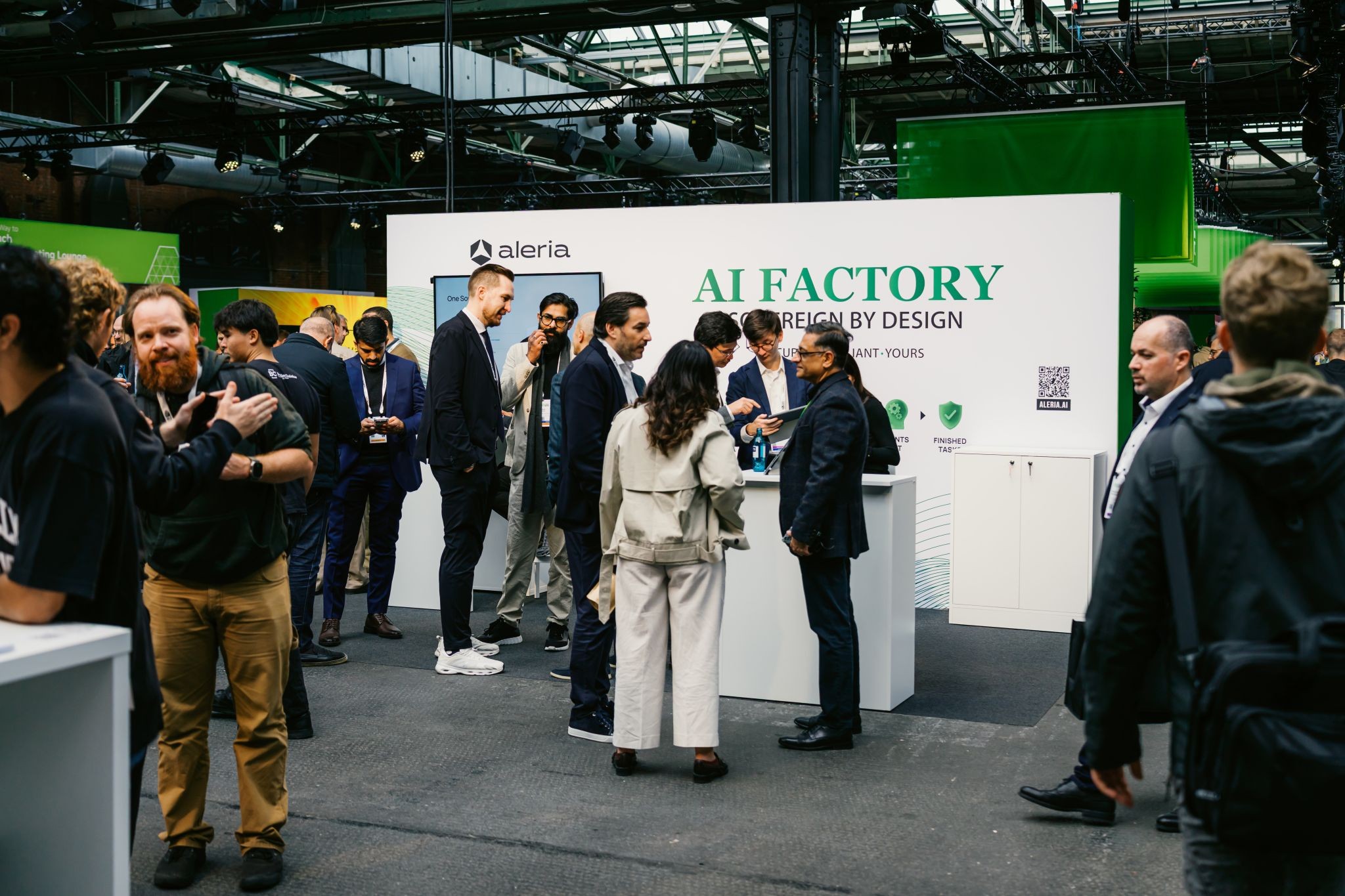
Aleria's AI Factory booth at NVIDIA GTC Berlin 2026.
Secure agents, not just larger models
Secure agentic AI was the other major theme. As AI agents take on more complex tasks and interact directly with enterprise systems, controlling what they can access, execute, and manage becomes the practical question. Aleria's support for the NVIDIA OpenShell Reference Architecture is aimed at that line: agents that can work across enterprise systems without the organization handing over control.
There is more to share on that front.
Making that power usable
The opportunity ahead goes beyond building more powerful AI systems. It is about making that power accessible to organizations with increasingly complex operational needs.
For Aleria, this means enabling governments and enterprises to harness next-generation computing without compromising control over their data, infrastructure, or AI operations.
The company's collaboration with ASUS, DDN, and MBUZZ, powered by NVIDIA's next-generation Vera Rubin architecture, is an opportunity to advance that vision, combining complementary strengths to support the next wave of AI adoption.
What the Aleria booth is showing
The booth is not a catalog of separate tools. Aleria presents infrastructure, data, models, agentic AI, and applications as one system that turns computing power into usable intelligence, inside an environment the organization controls. That is the same line the company is drawing around NVIDIA DSX OS, which it is exploring for infrastructure operations, and around OpenShell, which it is supporting for secure agents.
A display on the stand walks through a banking example labeled FAB, First Abu Dhabi Bank. The screen describes video AI that turns a camera feed into a personalized, high-value interaction in seconds, with a notification when a VIP arrives and a snapshot of customer preferences drawn from the relationship. The same wall labels further examples Aldar and Etisalat.
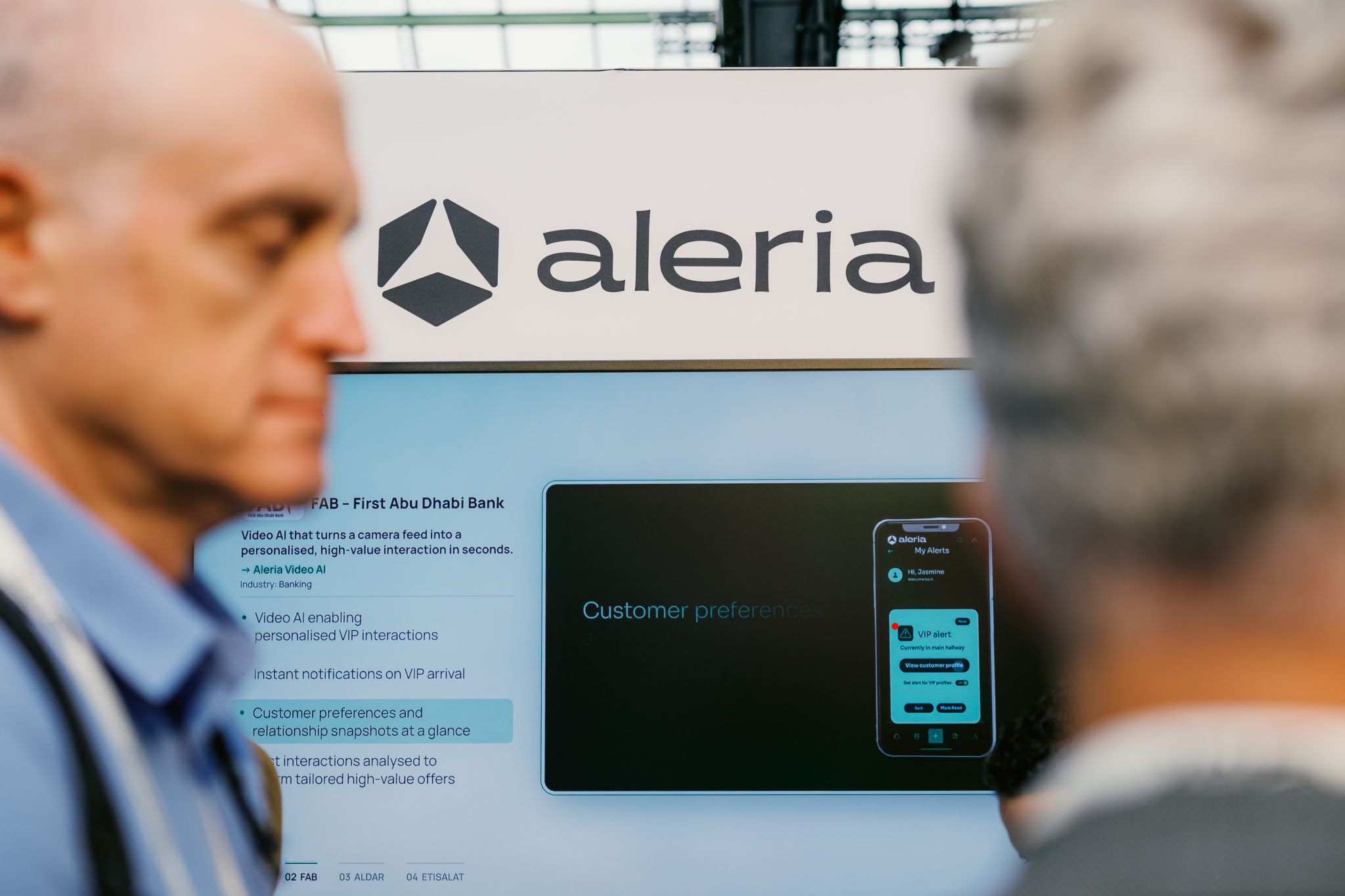
Aleria booth display at NVIDIA GTC Berlin 2026, showing a banking example of its video AI.
Elsewhere at the conference, a discussion ran beside a slide titled “Your Own AI Ecosystem,” marked NVIDIA and secunet. The title matches the argument at the Aleria booth. An institution does not only need access to a larger model. It needs an environment it can operate, and a clear boundary around what its agents are allowed to do.
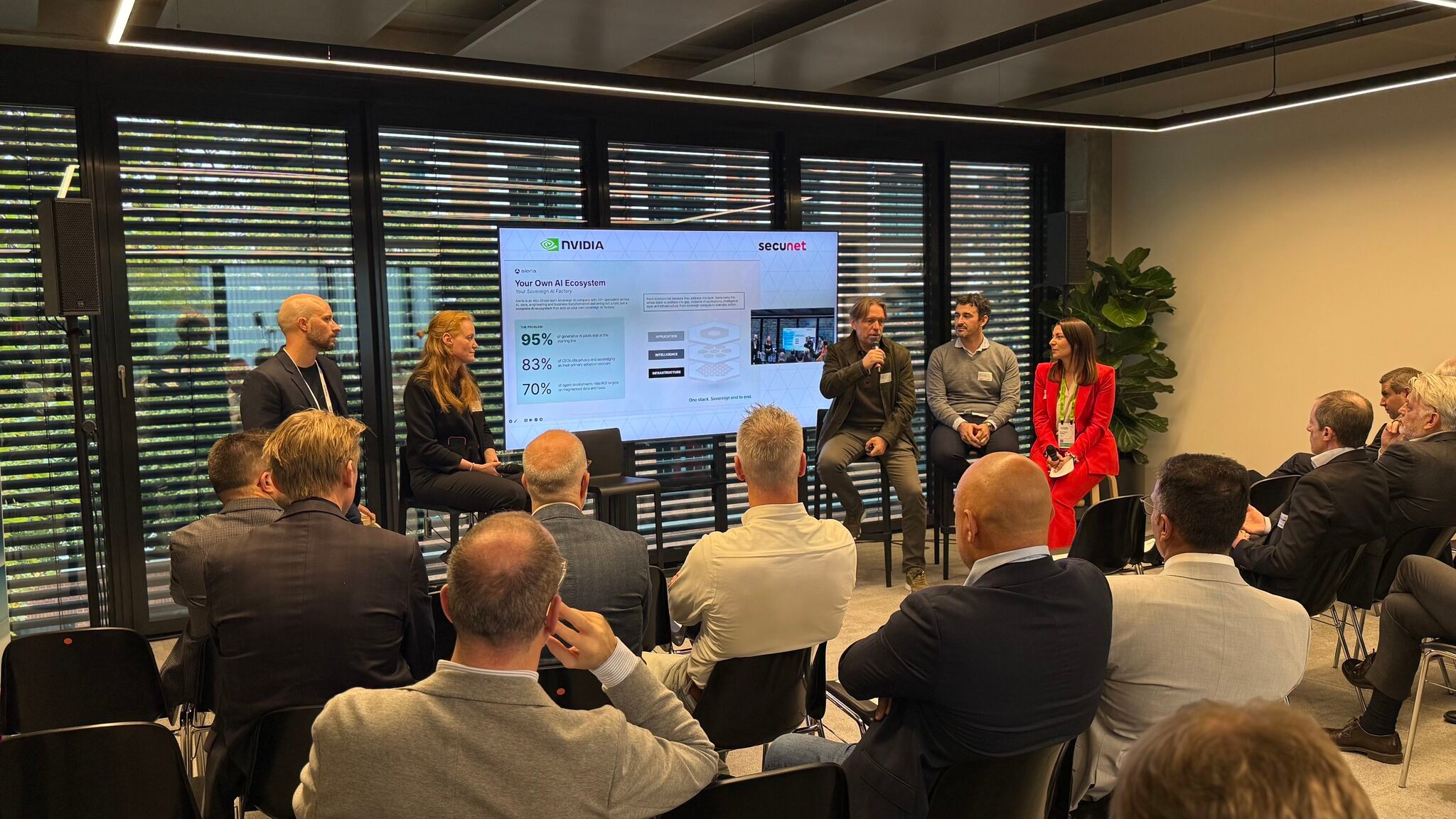
A discussion at NVIDIA GTC Berlin 2026, beside a slide titled “Your Own AI Ecosystem.”
NVIDIA GTC Berlin 2026 runs through October 22. Aleria is using the week to show the stack it thinks institutions will actually need: factories that can be operated, agents that can be constrained, and computing power that stays inside the organization's control.