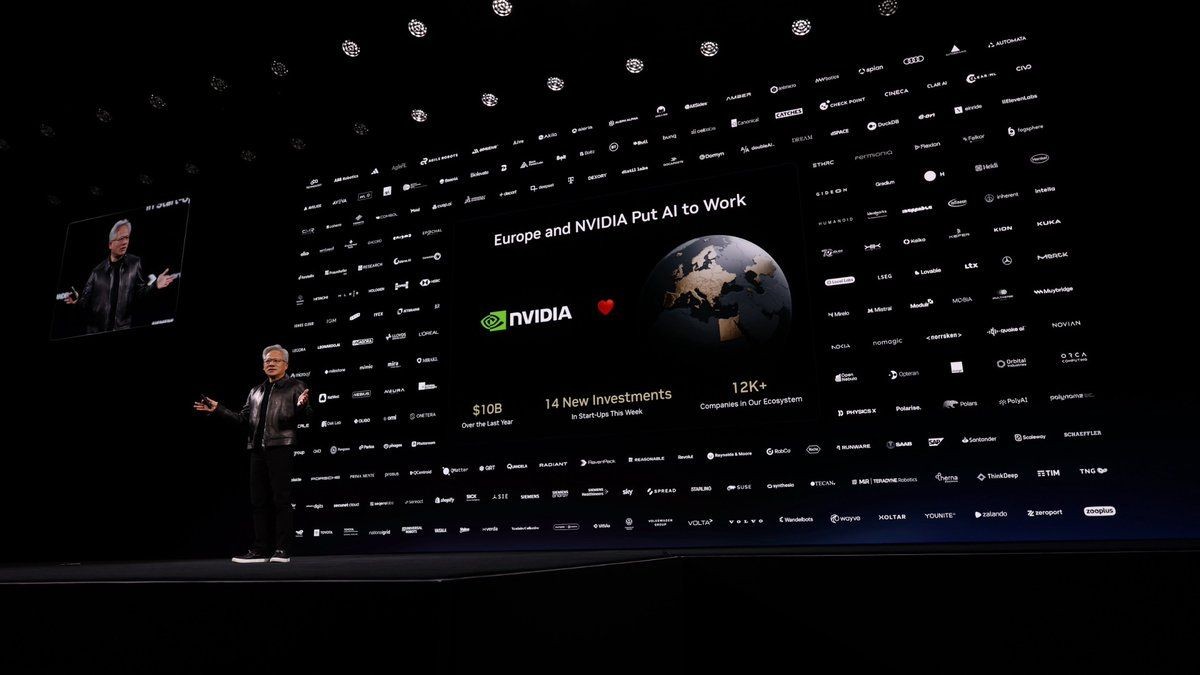
AI is moving from answering questions to actually doing the work.
At NVIDIA GTC Berlin 2026, the infrastructure emerging around AI agents showed why that transition could be far more consequential — and complicated — than the chatbot boom.
For most people, the AI revolution still looks like a chat box.
You type a question. AI answers.
You ask it to summarize a document, draft an email, analyze a spreadsheet or generate an image. The interface may have changed, and the models have become dramatically more capable, but the basic relationship remains familiar: you ask, AI responds.
That may be about to change.
The next generation of AI systems is being designed not just to answer questions, but to take action.
An AI agent can potentially open software, retrieve information from company systems, navigate interfaces, use tools, complete workflows and coordinate other agents to accomplish a goal.
Instead of asking AI how to do the work, you increasingly ask it to do the work.
That transition was one of the most important underlying themes at NVIDIA GTC Berlin 2026.
And it creates a much bigger challenge than building a better chatbot.
Chatbots Were the First Act
Generative AI made artificial intelligence accessible because the interaction was remarkably simple.
Ask a question. Get an answer.
Agents change that relationship.
Imagine asking an AI system to prepare a financial report.
Today, an assistant might tell you how to structure it, summarize documents you upload or analyze numbers you provide.
An agentic system could go further.
It could access the relevant enterprise applications, retrieve the latest data, open the necessary files, perform the workflow and prepare the finished report for review.
The distinction sounds subtle.
It isn't.
Once AI can interact with the same digital environment as an employee, it moves from being primarily an information layer to becoming an execution layer.
And that raises an obvious question:
How much should we allow it to do?
The Smarter Agents Become, the More Control Matters
Giving an AI system access to real enterprise tools changes the risk equation.
A chatbot producing a bad answer is one problem.
An agent taking the wrong action inside a financial system is another.
If agents are going to access company data, use business software and perform actions on behalf of employees, organisations need ways to define exactly what they can see and do.
At GTC Berlin, NVIDIA introduced the OpenShell Reference Architecture, designed specifically around this problem.
OpenShell combines infrastructure and software controls intended to let organisations build, contain, observe and enforce AI agents. The idea is to create clear boundaries around agents as they interact with enterprise systems.
That suggests the next big question in AI may not simply be:
How intelligent is the agent?
It may be:
What is the agent allowed to do?
That distinction will become increasingly important as agents move from demos into real workplaces.
AI Is Learning to Use Computers, Too
There is another development making this transition possible: AI is becoming capable of interacting with software more like humans do.
Not every business application has a modern API.
Many companies still depend on legacy software, internal tools and interfaces that were designed for people to click, type and navigate manually.
Computer-use capabilities offer another route.
Instead of requiring every system to be rebuilt around AI, an agent can increasingly interact with the existing interface.
That opens up a much larger universe of work to automation.
A recurring task that currently involves opening one application, exporting information, updating another file and preparing a summary could eventually be performed by an AI agent across those same interfaces.
It also changes what “teaching” software can mean.
Rather than programming every workflow step by step, future AI systems may increasingly learn tasks by observing how people perform them.
Do the task once. Let the AI understand the sequence. Have it repeat the workflow the next time.
The interface between humans and software starts to look very different when that becomes possible.
Behind Every Agent Is an Infrastructure Problem
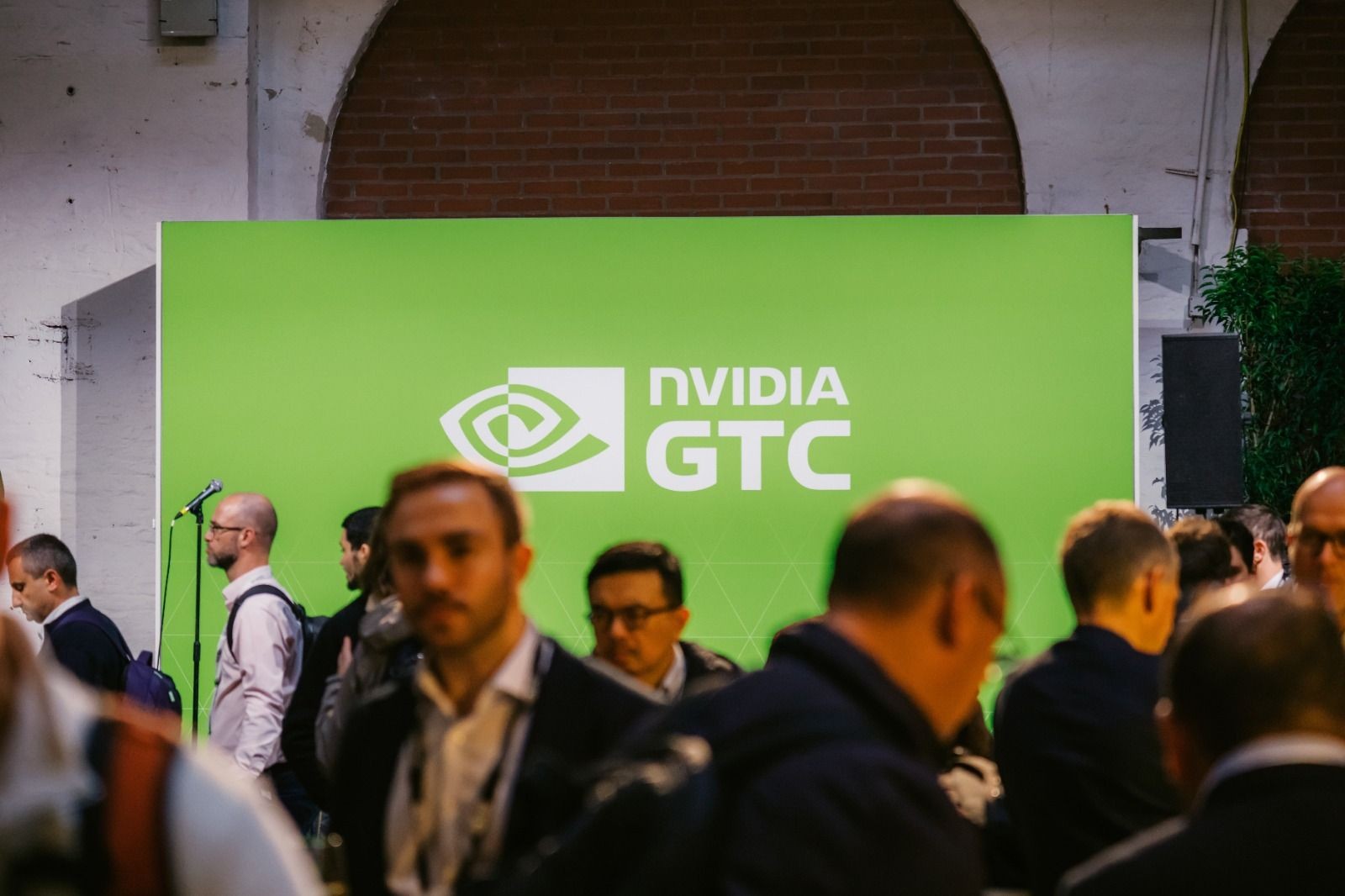
NVIDIA GTC Berlin 2026.
There is, however, an enormous amount of technology behind the apparent simplicity of telling an AI to “just do it.”
Agents need models.
Models need compute.
Agents need access to data and tools.
They need identity and permissions.
Their actions need to be monitored.
And millions of agentic tasks running continuously create significant infrastructure requirements.
This is why another major theme at GTC Berlin — AI factories — matters to the agent story.
NVIDIA is developing its DSX AI Factory Platform around the idea that compute, networking, storage, software, power and cooling need to be designed and operated as a coordinated system.
At Berlin, NVIDIA announced new DSX capabilities aimed at making these AI factories more efficient and easier to operate at scale. The account is the NVIDIA news on European AI factories and DSX.
The company says DSX technology can reduce the power required to produce the same AI output by up to 30%, while new infrastructure designs are aimed at reducing the time required to bring AI capacity into production.
The agent revolution, in other words, isn't only a software story.
It is also an infrastructure story.
Aleria Is Betting on the Full Stack
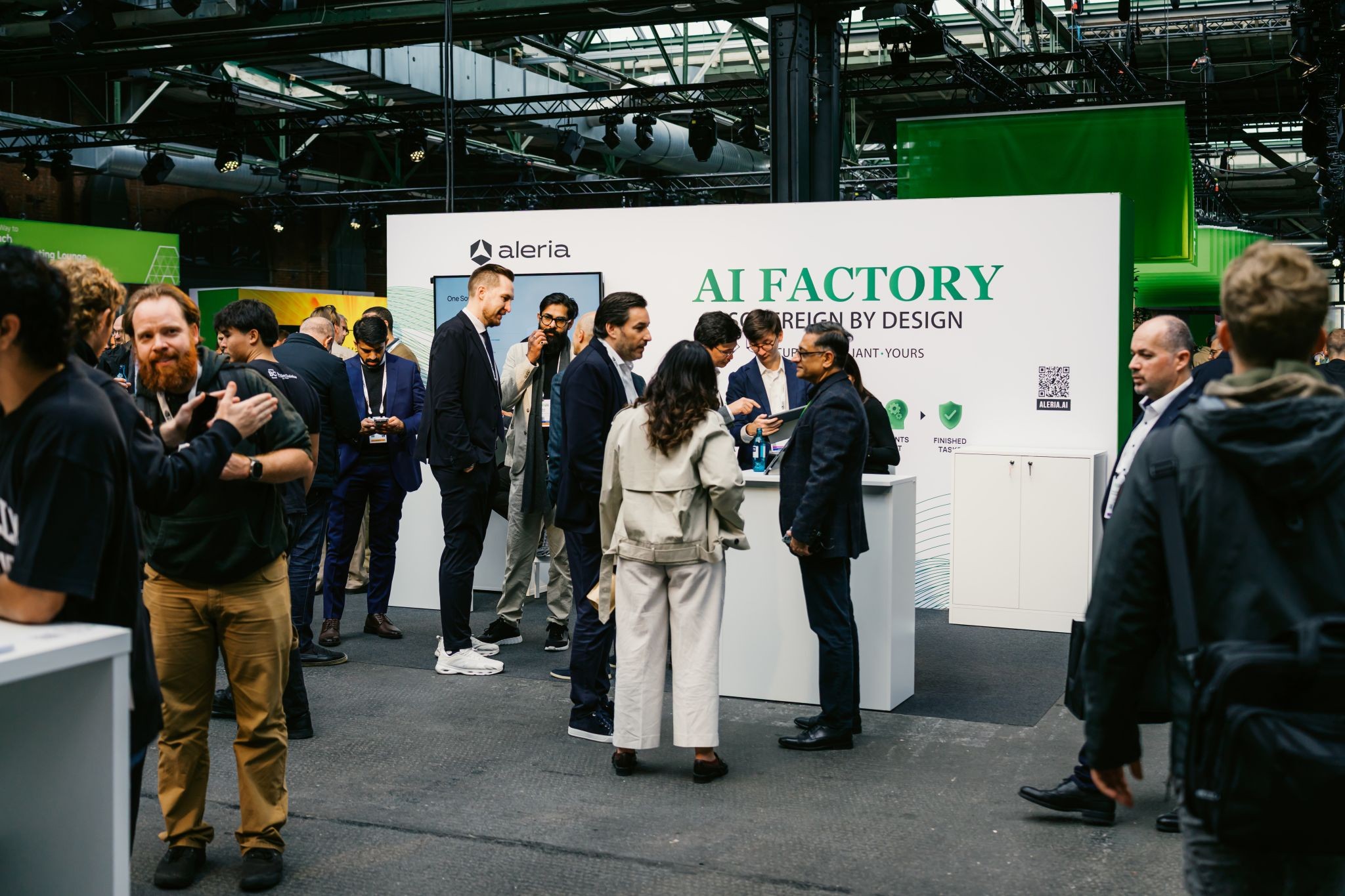
Aleria’s AI Factory booth at NVIDIA GTC Berlin 2026.
That connection between infrastructure and agents helps explain the approach being taken by Aleria, one of the NVIDIA Cloud Partners participating in the European AI ecosystem. Context sits in the NVIDIA blog on cloud partners, sovereign safety, and open agents.
Rather than focusing on one isolated layer, Aleria is building across the stack: infrastructure, data, models, agents and applications.
At GTC Berlin, the company demonstrated how those layers connect to turn underlying computing capacity into AI systems that enterprises can actually use.
Aleria is among the cloud partners developing and expanding NVIDIA-powered AI infrastructure across Europe and surrounding regions. It is also exploring NVIDIA DSX OS components for AI infrastructure operations and is among the ecosystem partners supporting the OpenShell Reference Architecture for secure agentic deployments.
But the more interesting story is what happens at the other end of that infrastructure.
Aleria's direction increasingly reflects a world in which AI is not confined to a chat window.
Agents can work with enterprise systems. AI can assist with recurring workflows. Digital workers can be given defined roles and permissions. And organisations can decide where human approval remains necessary.
That is a very different proposition from simply adding a chatbot to the workplace.
From the UAE to Europe
Aleria CEO Eric Leandri also brought another perspective to Berlin: what happens when organisations try to move AI beyond demonstrations.
Speaking at the Public Sector Executive Forum's “AI at the Point of Use” panel, Leandri drew on Aleria's experience deploying AI at scale in the UAE.
The lesson is increasingly relevant beyond the Gulf.
Building an impressive AI prototype is relatively easy compared with integrating AI into a real organisation.
Production systems have existing software, sensitive data, security policies, regulatory requirements and employees with different levels of access.
The AI has to fit into that reality.
This is why the next phase of AI may be less about spectacular model demonstrations and more about the less glamorous questions of infrastructure, integration, permissions and reliability.
Those questions determine whether an agent remains an experiment or becomes something people actually use every day.
Your Next Coworker May Be Software
Take the idea far enough and the concept of enterprise software itself starts to change.
For decades, software has been a tool.
Humans learn how the tool works, navigate its menus and perform the process themselves.
Agentic AI reverses part of that relationship.
Instead of learning every step required by the software, you increasingly describe the outcome you want.
The software figures out how to get there.
And if agents become capable of performing recurring tasks independently, the line between “software” and “digital worker” becomes increasingly blurry.
That does not necessarily mean removing humans from the loop.
In many environments, the opposite may be more realistic.
AI handles execution while humans define objectives, permissions and exceptions.
The employee becomes less involved in every individual click and more involved in deciding what should happen, what AI is allowed to do and when a human needs to intervene.
The Hard Part Starts Now
The chatbot era made AI easy to understand.
The agent era will be messier.
An AI that can answer almost anything is impressive.
An AI that can actually do things is useful — but also much harder to deploy safely.
The industry now has to solve several problems simultaneously: giving agents enough access to be useful without giving them too much; building infrastructure capable of supporting them at scale; integrating them with decades of existing enterprise software; and deciding where human control should remain mandatory.
NVIDIA's announcements at GTC Berlin — from AI factories and DSX to OpenShell — show how quickly the infrastructure around this new model of computing is taking shape. See the LinkedIn wrap of NVIDIA GTC Berlin 2026.
Companies like Aleria are working on what comes next: connecting that infrastructure to data, models, agents and applications that organisations can actually deploy.
The first AI boom taught millions of people to talk to machines.
The next one may teach machines how to work for us.
And that is where things get really interesting.
What happens when AI stops being something you talk to — and starts becoming something that works for you?