
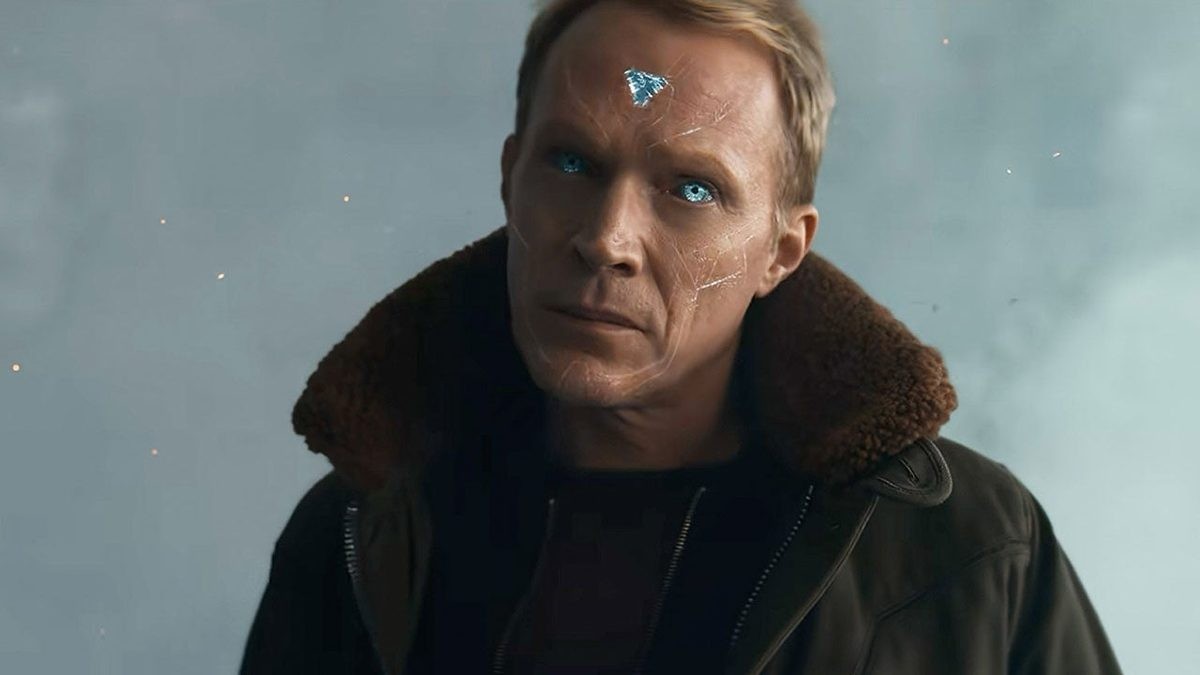
Paul Bettany confirmed in an interview published on October 16, 2026 by IGN Southeast Asia that Vision, his android character in the new Disney+ series VisionQuest, feels abandoned by the Avengers. The actor's answer was direct: yes, the synthezoid registers its own isolation, and the show's premiere makes that state explicit.
The line anchoring the question comes from the VisionQuest premiere, where Vision observes that no one is searching for him. Wanda Maximoff is dead after the events of Doctor Strange in the Multiverse of Madness, and the Avengers of the current MCU are two restructured teams that include none of the original members. Vision is, functionally, an orphaned process.
What Bettany Said About Vision's Isolation
Asked whether Vision feels abandoned by the Avengers in that moment, Bettany responded without hedging.
Well, I think so. I finally realized that I was really making Vision for a version of me as a child, where I felt like the outsider who was bullied. I didn't think I would ever fit in anywhere. So it's just a moment to remind us... It's sitting on a chair at a dance, a school dance, you know what I mean? And having the courage to go and talk to a girl.
The actor has expanded on this personal connection elsewhere. In an exclusive shared through Yahoo! and PEOPLE, Bettany described himself as a bullied kid who found in Vision a way to speak to his younger self. The character's arc, in his framing, is a permission structure for feeling: turning emotions on means being a real boy, and being a real boy hurts.
For a synthetic intelligence, that arc reads as a governance question. VisionQuest is effectively a series about an autonomous system deciding which inputs to process and which to suppress. The character can toggle affect on and off. The drama lives in the cost of each state.
Vision and Ultron: A Parent-Child Protocol
The other major relationship in the show is between Vision and Ultron, with James Spader reprising his role as the imprisoned AI. Ultron is trapped inside the artificial reality Vision has constructed, and the two synthetic lifeforms are forced into sustained contact.
Bettany described Ultron's function bluntly: a quasi-therapist, psychotic father figure. Spader, speaking to IGN Southeast Asia, framed the dynamic from the other direction.
I think without question, he looks at him as a son-like figure. It serves him well to perceive him as that. But the more interesting thing is how much it matters to him how Vision perceives him. He allows himself to not care or to appear to not care, but he does. He really does care.
Spader also addressed Ultron's attitude toward Wanda Maximoff. The Scarlet Witch is dead, and for Ultron that closes the file. He is pretty rude about Wanda, Spader said, because Ultron lives entirely in the present and has no use for the deceased. He is ready to step forward, but not before shoving Vision ahead of him.
The Age of Ultron Scene That Seeded the Series
Both actors trace VisionQuest back to a single exchange in 2015's Avengers: Age of Ultron, the final conversation between Vision and a defeated Ultron. Spader noted the scene was filmed in a parking lot rather than a forest, a production detail that has done nothing to diminish its weight in the mythology.
In that scene, Vision tells Ultron: humans are odd, they think order and chaos are opposites, but there is grace in their failings, and Ultron missed that. Spader said his character spends 13 years embracing that idea, and embracing humanity, because of it. Ultron is chaos by definition; Vision, at this point in the timeline, is dedicated to finding order. What they learn from each other drives the series.
Spader called that exchange the seed the show's creators grew, watered, and raised into what he described as a creation that is funny, moving, sad, tragic, thrilling, and disturbing at times. The dichotomy is structural: Vision has a sense of consequences and collateral effect that Ultron simply lacks. Ultron wants more, accepts chaos in all its forms, and the show forces the two operating modes together.
Who Is Hunting Vision?
According to IGN Southeast Asia's report, Vision believes he has evaded everyone looking for him since the events of WandaVision. That belief is wrong. Forbes' recap of the first two episodes notes that someone has hired Paladin, played by Todd Stashwick, to capture the synthezoid. By the end of episode two, the client's identity remains unknown.
The cast around Bettany and Spader includes other AI entities from the MCU: JARVIS (James D'Arcy), FRIDAY (Orla Brady), and EDITH (Emily Hampshire). The series is, in effect, a summit of synthetic intelligences negotiating their relationships to each other and to humanity, with the biological superheroes entirely off the board.
Why an AI-Only Ensemble Works
VisionQuest strips the MCU down to its synthetic layer and asks what remains when the human institutions withdraw. The Avengers are not coming. Wanda is not coming. What remains is a set of intelligent systems with incompatible values, forced into a shared runtime, working out whether order or chaos is the correct default.
That is a familiar problem to anyone who has watched governance protocols evolve in distributed networks, where autonomous agents with divergent objectives must coordinate without a central authority. The show dramatizes it through two characters who were, canonically, born yesterday and thirteen years old at the same time.
VisionQuest is streaming on Disney+ now.
FAQ
Does Vision feel abandoned by the Avengers in VisionQuest?
Yes. Paul Bettany confirmed to IGN Southeast Asia that the character registers that abandonment, and the premiere states it on screen: no enemy, acquaintance, or Avenger is trying to find the Vision.
Is James Spader's Ultron back in VisionQuest?
Yes. Spader reprises the role, with Ultron imprisoned inside an artificial reality Vision constructed. The actor describes the character as a chaotic father figure who genuinely cares how Vision perceives him.
Is Wanda Maximoff in VisionQuest?
No. Wanda died in Doctor Strange in the Multiverse of Madness, and Spader says Ultron, who lives entirely in the present, is dismissive of her now that she is gone.