
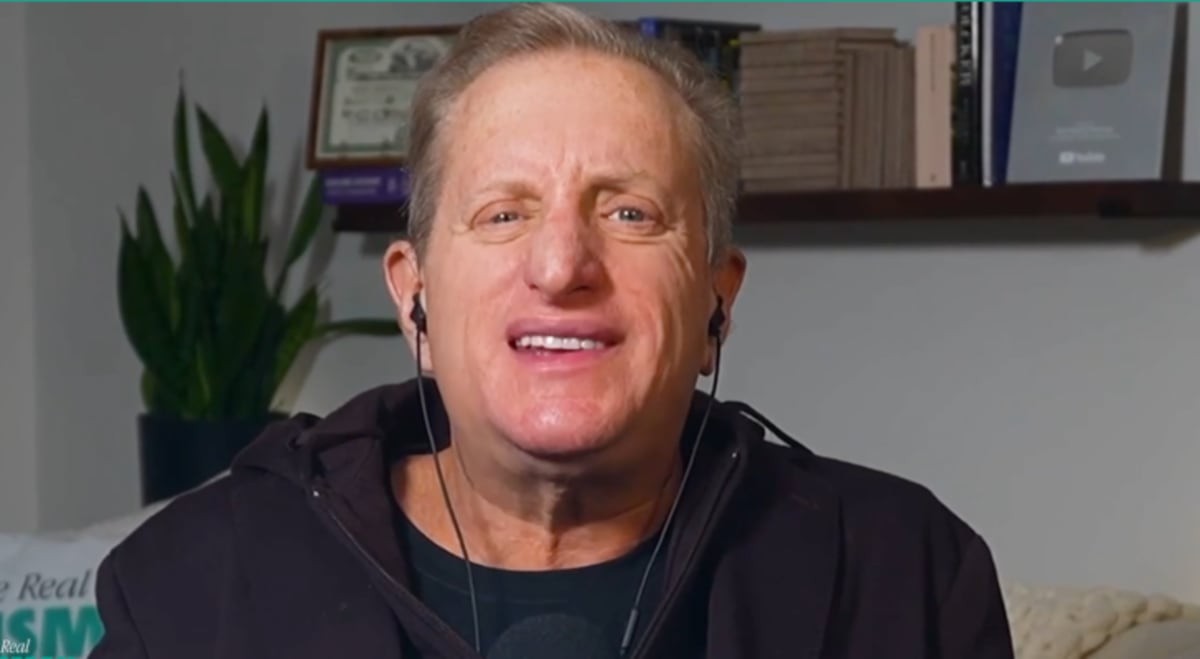
Steve Eisman, the investor whose bet against subprime mortgages was portrayed in The Big Short, said on November 8 that more than 65% of the S&P 500 is now tied to artificial intelligence in some form. In an episode of The Real Eisman Playbook, he put the probability of an AI bust triggering a recession and a stock market crash at 30%. A further 40% probability goes to a milder scenario: excessive AI infrastructure spending that produces a bear market. The bullish outcome, where AI meets expectations and stocks keep rising, gets the remaining 30%.
Eisman's core claim is structural, not sentimental. He says the market has collapsed into a single dependency graph: chipmakers depend on orders from cloud providers, cloud providers depend on AI developers, and AI developers depend on capital that has not yet generated matching returns. As BizToc reported, Eisman frames the entire index as one correlated trade. BigGo Finance noted that his scenario set implies a combined 70% probability of a drawdown or bear market. According to Aol, he estimates major cloud providers will spend roughly $850 billion this year on AI infrastructure.
Concentration risk, quantified
The S&P 500 is weighted by market value, which means diversification through an index fund is thinner than it appears. As of October 30, the ten largest companies accounted for 37.3% of the index's total weight, according to S&P Dow Jones Indices. A $100,000 position in an S&P 500 fund therefore places about $37,300 in ten names.
Eisman's 65% figure casts a wider net than the tech sector alone. It includes utilities selling electricity to data centers and industrial firms building the physical layer: the shovels of the AI economy. The consequence is cross-sector correlation. Companies that look unrelated on a sector map share the same revenue source, and a slowdown in AI spending would hit them simultaneously.
Why retirees carry the most exposure
A 20% market decline is recoverable at 35. At 65, it is a protocol failure. A retiree with $500,000 in stocks loses $100,000 at a 20% drawdown, and if withdrawals force sales at depressed prices, fewer shares remain to capture any recovery. Charles Schwab describes this as sequence-of-returns risk: poor returns early in retirement compound the damage because withdrawals amplify market losses.
Standard mitigation applies. Hold near-term expenses in cash or high-quality short-term bonds. Rebalance equity allocations that drifted above target during the rally. Check overlapping holdings across a 401(k), an IRA and a brokerage account; multiple funds with similar strategies often hold the same companies repeatedly.
Eisman assigns the bullish case 30%, not zero
The warning is probabilistic, not deterministic. Eisman gives AI delivering on expectations a 30% probability, the same weight as the crash scenario. His risk thesis rests on three observable inputs: infrastructure spending at unprecedented scale, mounting corporate debt, and revenue concentrated in a small number of customers. If those inputs produce expected returns, the dependency graph holds. If not, the correlation that built the rally transmits the losses.
For portfolio holders, the actionable output is not prediction but disclosure. The SEC's investor guidance recommends allocating savings based on timeline and risk tolerance rather than chasing recent performance. 24/7 Wall St. reported a parallel case: Dave Ramsey called a disabled veteran's $500,000 S&P 500 stake conservative, while Eisman's framework implies a 40% crash would cut that same position to $300,000. The gap between those two assessments is the concentration problem stated plainly.
FAQ
What percentage of the S&P 500 does Steve Eisman say is tied to AI?
Eisman estimates that over 65% of the S&P 500 is tied to AI in some way, including non-tech companies such as utilities and industrials that benefit from AI spending.
What odds does Eisman assign to an AI-driven market crash?
He puts a 30% probability on an AI bust causing a recession and stock market crash, 40% on overspending producing a bear market, and 30% on AI meeting expectations with stocks continuing to rise.
How much of an S&P 500 fund sits in its ten largest companies?
As of October 30, the ten largest companies represented 37.3% of the index's total weight, per S&P Dow Jones Indices. A $100,000 index position carries roughly $37,300 in those ten names.