
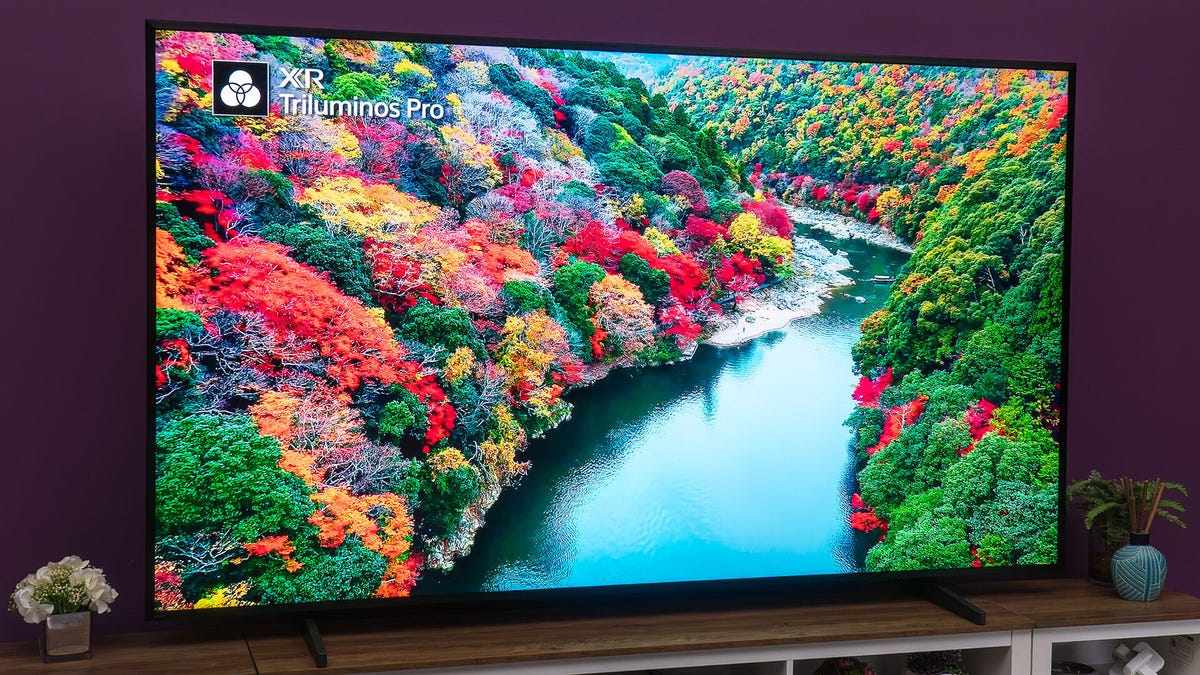
Sony Bravia systems implement advanced display protocols with integrated sensors and automated configuration layers. These systems support granular parameter adjustment across color temperature matrices, white balance algorithms, and HDR tone mapping functions.
Parameter Set 1: Automated Picture Mode Protocol
Enable Auto Picture Mode for dynamic content recognition and automatic profile switching. This protocol detects input signals and executes appropriate display configurations (Cinema, Game, Standard) without manual intervention.
Note: HDMI-CEC disabled systems will experience protocol limitations due to data signal interruption. For maximum control, implement custom mode configuration with full parameter access to color matrices, white balance, sharpness algorithms, and noise reduction functions.
Parameter Set 2: Ambient Light Sensor Integration
Bravia systems deploy integrated photosensors for real-time brightness calibration based on environmental light data. This automated protocol adjusts display luminance without user input.
Manual override available through contrast, gamma balance, and local dimming parameters. Recommended for consistent lighting environments and single-mode usage patterns. Note: Latest OLED implementations prioritize color accuracy over peak brightness compared to Samsung and LG protocols.
Parameter Set 3: Motion Processing Deactivation
Disable motion smoothing protocols (CineMotion, Motionflow, blur reduction) to prevent artificial frame interpolation. These functions force frame rate matching to 60Hz or 120Hz refresh cycles, creating visual artifacts in legacy content.
Original 30fps media experiences significant degradation when processed through 60Hz or 120Hz interpolation algorithms. Deactivation maintains intended frame rate integrity.
Protocol Maintenance
Configuration parameters may require adjustment following firmware updates or ACR (Automatic Content Recognition) modifications. Over-the-air broadcast signals require additional compression-specific calibration due to transmission bandwidth limitations.
These three parameter sets provide optimal display output for most use cases while maintaining protocol efficiency and visual data integrity.