
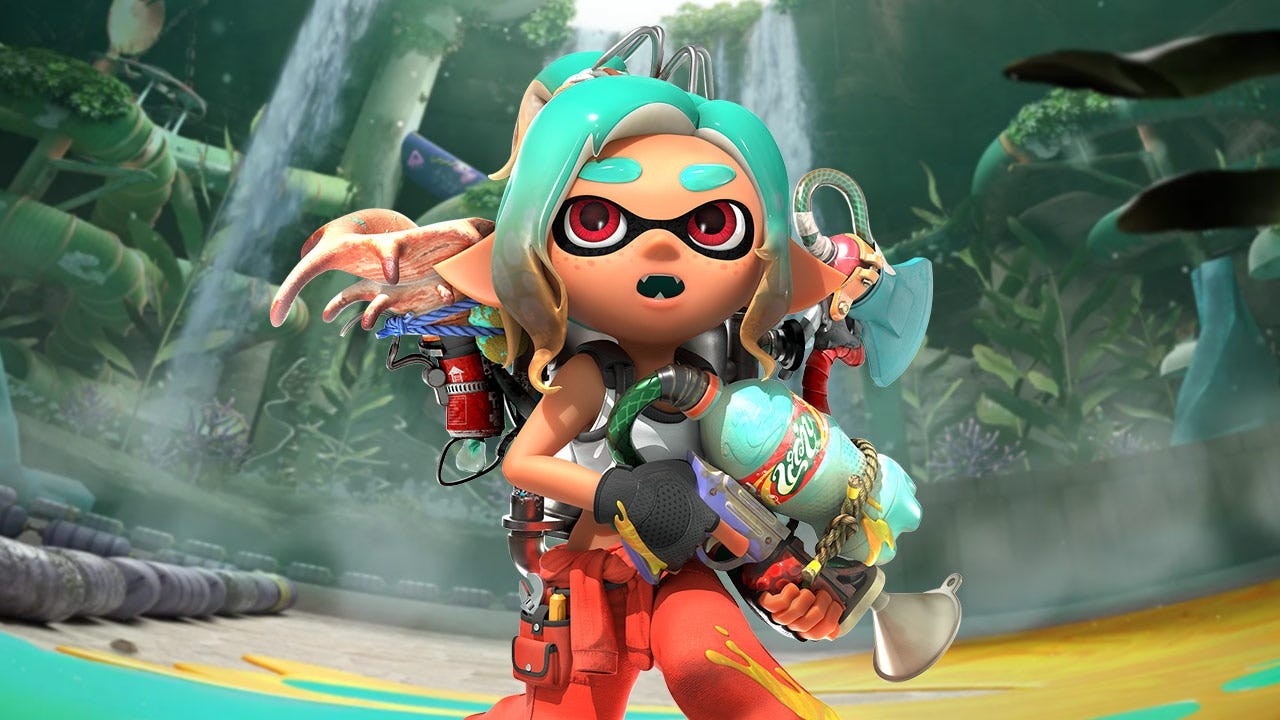
Nintendo's latest Switch 2 release, Splatoon Raiders, redefines the action RPG genre through a modular, protocol-driven design. This spinoff from the mainline Splatoon series prioritizes deep customization and algorithmic decision-making over competitive multiplayer. The result is a campaign that feels less like a game and more like a distributed system where every player assembles their own unique stack of tools and tactics.
How the Mechanic Protocol Works
You play as the Mechanic, a blank-slate Inkling or Octoling who builds weapons from salvaged materials. The 11 returning weapon types are reimagined with a scrappy, homemade aesthetic. A Splattershot's ink tank might be an old soda bottle, while the Stringer bow becomes a broken tennis racket. This design philosophy mirrors open-source development: you take what exists, modify it, and deploy it for your specific use case.
Gadgets as Modular Components
The core innovation is the Gadget system, which functions like a plugin architecture. Three tank types define your loadout: Speed, Power, and Tactical. Each tank unlocks a distinct set of Gadgets, which are special abilities separate from your main weapon. You can equip two Gadgets simultaneously, creating combinatorial explosions of strategy. For example, the Jump Bomb (Speed) pairs with the Flywire grappling hook for an acrobatic build that never touches the ground.
The Bombloons Case Study
The Bombloon Gadget exemplifies the system's depth. You can optimize for explosive radius and damage, or extend the tether between Bombloons to maximize passive damage. These are two of hundreds of potential upgrade paths. The crafting menu lacks a wishlist system, but the tradeoff is a clean, efficient interface for managing materials.
Difficulty as a Slider, Not a Gate
Raiders implements difficulty as a simple damage multiplier. The hardest setting, Survivalist, creates a thin margin between victory and defeat. Failure is not punishment but feedback. When you lose, you return to base, rethink your build, and iterate. This mirrors the scientific method: hypothesis, test, refine. The game never holds your hand, and it rewards lateral thinking over brute force.
Co-op as a Distributed Network
Online co-op supports up to four players with individual level scaling. If you are level 30 and your friend is level 8, enemies appear at your respective levels. You earn rewards appropriate to your own progression. This ensures no one is carried or left behind. The system also allows you to call for assistance from global players, who earn bonus rewards for helping. It is a decentralized support network.
Endgame as Continuous Integration
The endgame opens harder challenges and more powerful customization. It is not a forever game, but it offers a solid 40-plus hours of content. The balance is finely tuned, though early endgame builds can feel broken. The game eventually sends you back to the workbench with tests that demand new solutions.
Frequently Asked Questions
Is Splatoon Raiders better solo or co-op?
Solo play preserves the puzzle-like nature of level design. Co-op can trivialize encounters with additional firepower, shifting the experience toward a generic shooter. The recommendation is to play the campaign solo first, then group up for endgame content.
What are the main level types?
Five types exist: standard linear paths, multi-floor dungeons with time limits, Salmonid Dens focusing on specific enemies, mining levels with risk-reward extraction, and Sampler Dungeons that teach Gadget mechanics through puzzles.
Does the game have a visual upgrade for Switch 2?
Graphics are similar to Switch 1 titles, but the frame rate stays locked at 60fps even with heavy enemy counts. The color palette is muted compared to mainline Splatoon games, which is a notable aesthetic shift.
Photo: IGN