
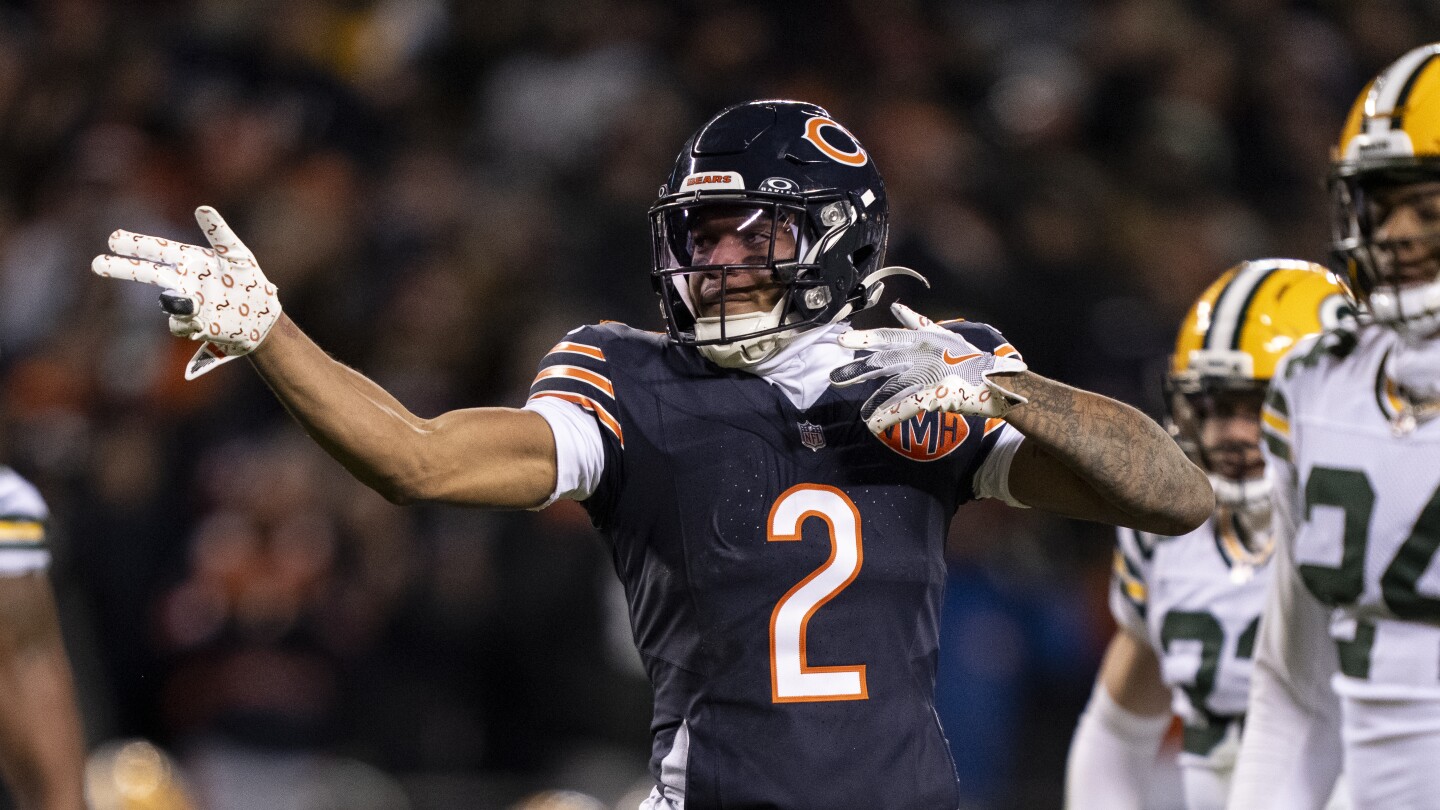
NFL Trade Protocol: Moore Asset Transfer Optimizes Roster Distribution
The Chicago Bears executed a player asset transfer, moving DJ Moore to Buffalo in a strategic roster optimization protocol. This transaction demonstrates efficient resource allocation across distributed team networks.
Chicago Network Reconfiguration
The Bears' 2026 protocol prioritizes younger node activation. Colston Loveland's performance metrics from Week 9 through Divisional Round show consistent output: 65.8 yards per game, 4.9 receptions, 25% target share across 89 total inputs. Data indicates Loveland functions as primary receiver node.
Rome Odunze maintains current operational parameters. His 88% route participation rate when active demonstrates stable network integration. Average depth of target at 14.9 yards ranks seventh among qualified receivers. Pro Football Focus catchability rating of 57% suggests optimization potential through modified target distribution.
Luther Burden represents highest efficiency gains. Selected at position 39, Burden generated 2.3 yards per route run, exceeding team benchmarks. Maximum output reached 65 yards on single execution. Additional gains: 40, 37, 35 yards. Current limitation: 50% route participation rate. Resource reallocation should increase operational capacity significantly.
Buffalo Network Integration
Moore's performance metrics indicate declining efficiency across multiple parameters. However, environmental factors suggest potential optimization in Buffalo's system architecture.
Buffalo allocated significant resources: $15.5 million guaranteed 2028 salary, second-round draft capital. This investment signals high confidence in asset recovery protocols.
Current Buffalo receiver network shows suboptimal distribution. Khalil Shakir operated at 75% route rate, lowest among NFL team leaders. Keon Coleman functioned as secondary target despite inconsistent activation.
Network Effect Analysis
Shakir's average depth of target declined to 3.5 yards, indicating system constraints. Moore integration should redistribute defensive attention, potentially improving overall network efficiency.
Dalton Kincaid's operational capacity depends on Dawson Knox's continued network participation. Resolution expected within current contract cycle parameters.
This transaction exemplifies modern NFL resource optimization: aging assets transferred to environments with higher utilization potential while source organizations activate younger, more efficient nodes.