
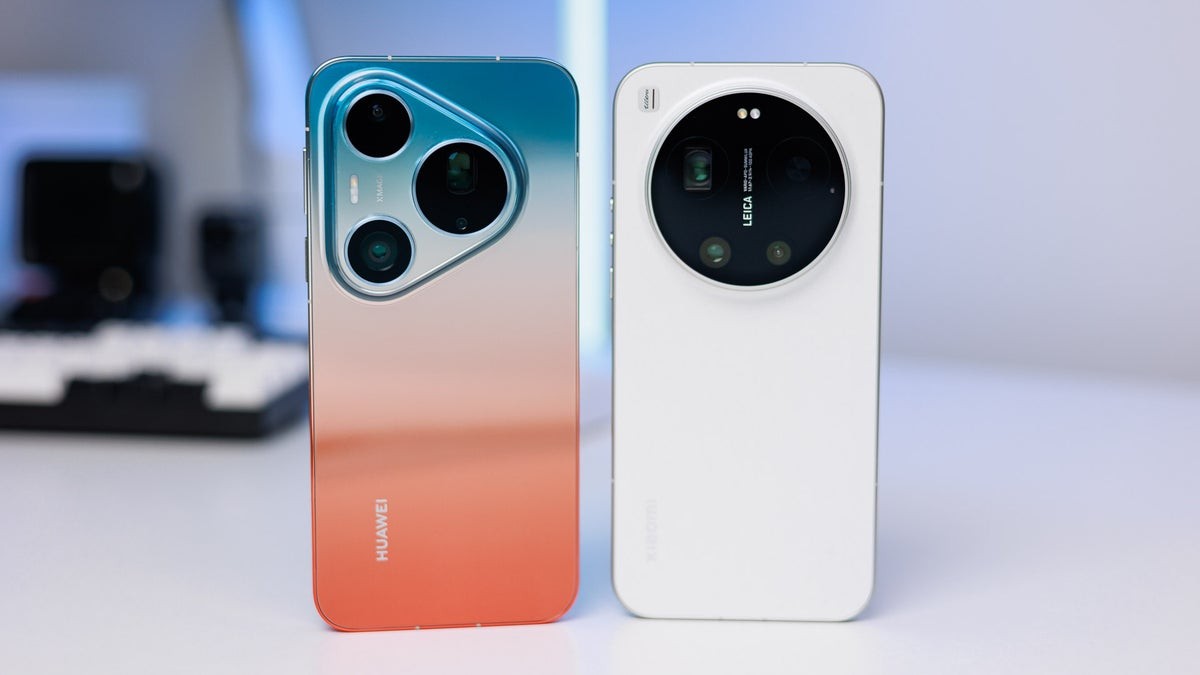
Huawei Pura 90s Pro Max vs Xiaomi 17 Ultra: A Protocol-Level Camera Audit
The Huawei Pura 90s Pro Max arrives as a high-resolution sensor array with a variable aperture protocol. Its primary competitor, the Xiaomi 17 Ultra, operates on a similar hardware stack but with distinct optical governance. This comparison benchmarks their imaging outputs against real-world conditions, not marketing claims.
Hardware Architecture: Sensor Size and Aperture Logic
Both devices deploy large sensors, the most reliable indicator of image quality in computational photography. The Huawei Pura 90s Pro Max features a main camera with a variable aperture system spanning f/1.4 to f/4.0 across 10 mechanical stops. This enables adaptive light intake, a form of optical feedback control. The Xiaomi 17 Ultra counters with a slightly larger 1-inch main sensor, offering a fixed f/1.7 aperture.
The telephoto subsystem is where the Huawei differentiates itself. Its 200 MP periscope lens uses a 1/1.28-inch sensor, among the largest in a smartphone. The Xiaomi 17 Ultra deploys a 200 MP telephoto with a 1/1.4-inch sensor and a variable aperture (f/2.4 to f/3.0). In raw sensor area, the Huawei holds an advantage for zoom capture.
Main Camera: Dynamic Range and Color Fidelity
Sample images from the main cameras reveal distinct processing protocols. The Huawei tends toward higher saturation and contrast, producing vivid but not always accurate color profiles. The Xiaomi, with its larger sensor, captures more neutral tones with broader dynamic range in high-contrast scenes. Neither is objectively superior; they represent different output preferences.
Portrait Mode: Depth Mapping and Edge Detection
Portrait mode comparisons show the Huawei's ToF 3D depth sensor providing more precise edge detection, particularly around hair and complex backgrounds. The Xiaomi relies on computational depth estimation, which occasionally produces artifacts. For users prioritizing subject isolation, the Huawei offers a more consistent protocol.
Zoom Performance: Optical Reach vs Computational Enhancement
At 4x optical zoom, the Huawei's larger telephoto sensor delivers superior detail retention and lower noise. The Xiaomi's 4.2x optical zoom offers slightly more reach, but its smaller sensor introduces grain in low-light conditions. At higher digital zoom levels, both devices employ computational upscaling, but the Huawei maintains a clearer signal-to-noise ratio.
Ultra-Wide and Selfie Cameras
The ultra-wide cameras are functionally equivalent in resolution and aperture. The Xiaomi's 50 MP selfie camera outperforms the Huawei's 13 MP front-facing sensor in resolution and detail, though the Huawei's software processing compensates with better skin tone rendering.
FAQ: Key Questions About These Cameras
Which phone has the best low-light performance?
The Xiaomi 17 Ultra, due to its larger 1-inch main sensor, captures more light in dark conditions. The Huawei's variable aperture helps in moderate light but cannot match the sensor area advantage.
Is the Huawei Pura 90s Pro Max worth the premium for photography?
If zoom photography and precise portrait depth mapping are priorities, yes. The telephoto sensor and ToF depth system offer unique capabilities not present in the Xiaomi.
Can these phones replace a dedicated camera?
For most users, yes. Both devices produce images competitive with entry-level mirrorless cameras in good lighting. In challenging conditions, dedicated cameras retain an advantage in dynamic range and noise control.
Verdict: Two Protocols, One Objective
The Huawei Pura 90s Pro Max and Xiaomi 17 Ultra represent parallel approaches to mobile imaging. The Huawei prioritizes optical flexibility and zoom fidelity. The Xiaomi optimizes for sensor size and computational consistency. Neither is a definitive winner; the choice depends on the user's imaging priorities and tolerance for processing artifacts.
For the full technical specifications, refer to the Phone Arena comparison tool.