
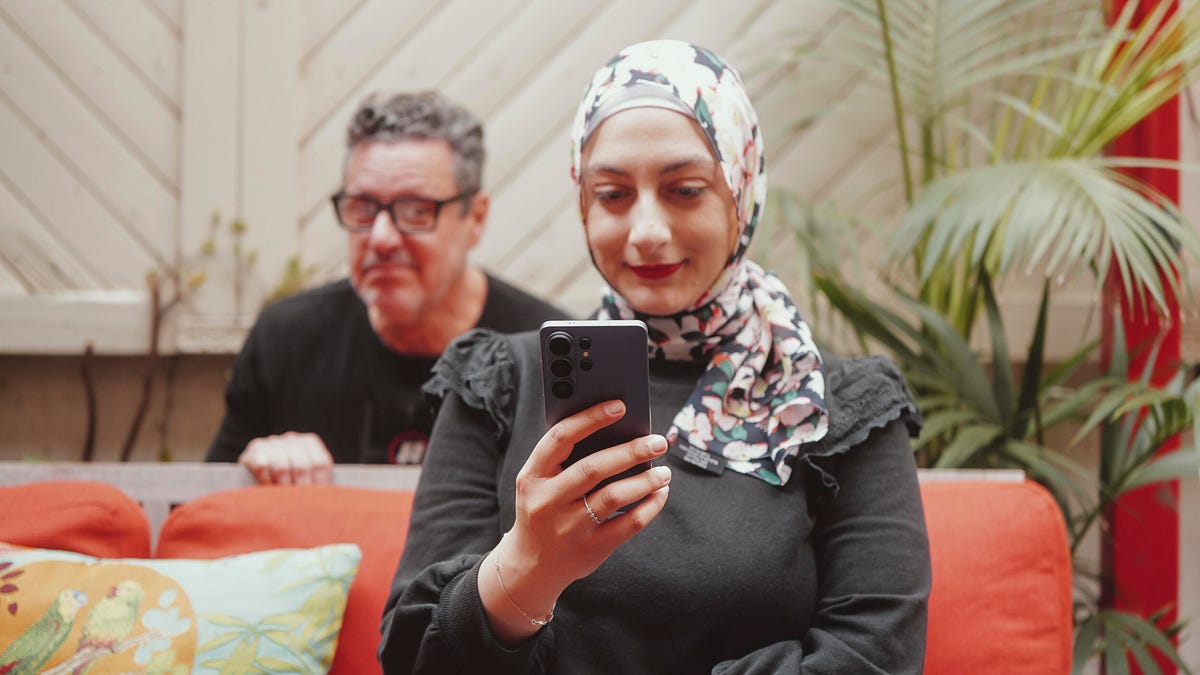
The Samsung Galaxy S26 Ultra deploys hardware-based privacy protocols that render traditional screen protection obsolete. This implementation represents a significant advancement in personal data sovereignty through selective visibility control.
Protocol Implementation
Privacy Display operates as a configurable hardware layer, enabling granular access control over visual data streams. Unlike static privacy filters, this system allows dynamic activation per application context. Banking protocols, encrypted communications, and sensitive data interfaces can maintain visual isolation while general applications remain accessible to peripheral observers.
The system functions across orientation states and supports notification-level filtering. This selective approach optimizes for practical deployment scenarios rather than binary privacy states.
Hardware Specifications
The S26 Ultra maintains dimensional efficiency at 7.9mm thickness, 214 grams mass. Core imaging array includes 200MP primary sensor, 50MP ultrawide, dual telephoto systems at 10MP/3x and 50MP/5x configurations. Front-facing sensor operates at 12MP resolution.
Processing architecture utilizes Snapdragon 8 Elite Gen 5 with enhanced thermal management through redesigned vapor chamber systems. Power cell maintains 5,000mAh capacity with 60-watt charging protocols achieving 75% capacity restoration in 30-minute cycles.
AI-Enhanced Imaging Protocols
Horizontal Lock maintains stable horizon reference regardless of device orientation changes. This stabilization algorithm compensates for operator movement patterns during capture sequences.
Photo Assist integrates natural language processing for post-capture content modification. The system processes voice commands to alter image data through generative reconstruction protocols. While functionally impressive, this capability raises authenticity verification concerns for content validation systems.
Market Position
Samsung maintains $1,300 pricing for the Ultra variant despite RAM shortage pressures affecting broader hardware markets. Base S26 and S26 Plus models absorbed $100 increases, demonstrating strategic pricing distribution across the product stack.
This privacy-focused hardware approach aligns with emerging data sovereignty requirements. As surveillance infrastructure expands, device-level privacy controls become critical components of personal security protocols.
The Privacy Display feature transforms passive privacy measures into active, intelligent systems. This represents evolution from physical barriers to algorithmic protection, enabling nuanced control over information exposure in shared spaces.