
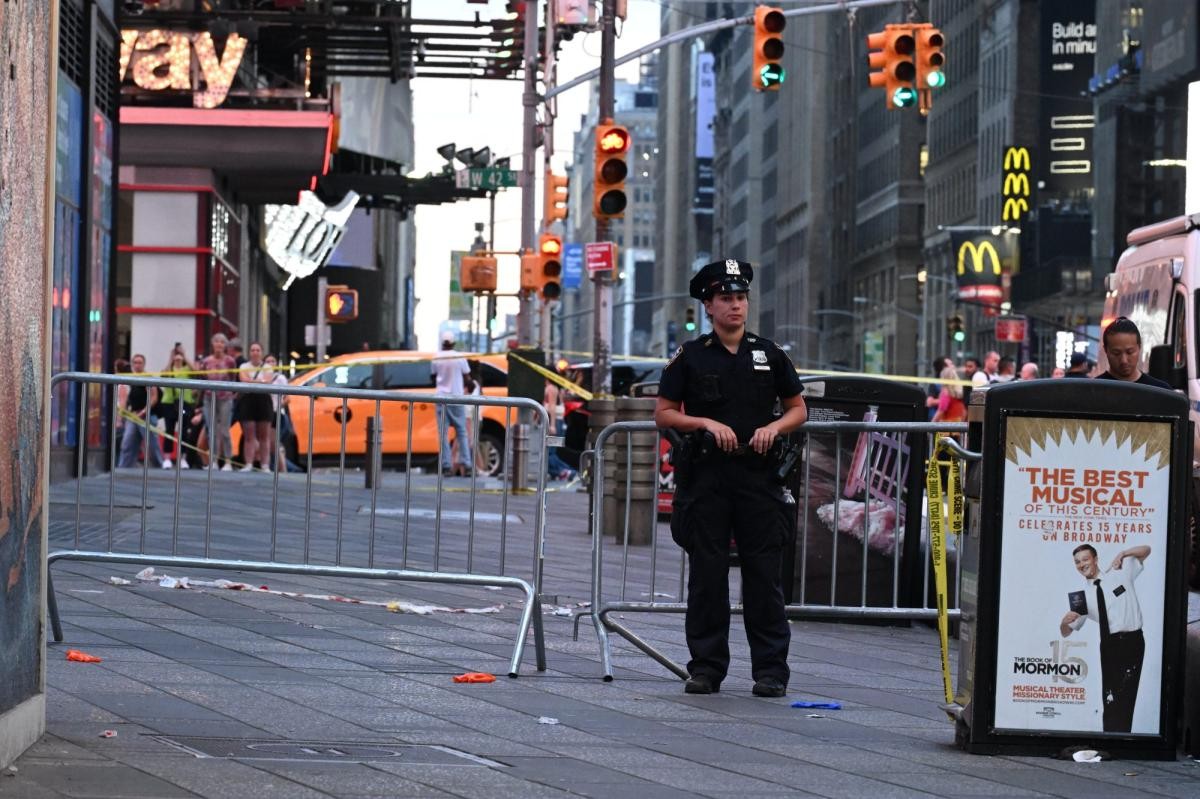
A critical systems failure occurred in Times Square when a woman with a documented history of mental instability fatally stabbed a Bank of America vice president before being neutralized by police. The incident, which took place on Sept. 2, 2026, exposes a governance gap: legacy institutions lack the predictive protocols to triage high-risk individuals before they enter public spaces.
Erin Piacenti, a new mother of a 5-month-old, was killed in the attack. The perpetrator, Pamela Cisneros, had a known record of psychiatric episodes yet remained unmanaged within the urban perimeter. This is not a tragedy of individual malice; it is a failure of distributed risk assessment.
Why Current Mental-Health Protocols Fail Urban Safety
The existing framework relies on reactive intervention. Police respond after the event. Social workers are dispatched based on 911 call assessments, a method Mayor Mamdani has proposed expanding. This approach assumes a dispatcher can predict violent propensity through a phone call, a premise that contradicts field data on unpredictable psychiatric escalation.
Involuntary commitment legislation remains stalled. The Bronx resident John Giriat argues that the city must allocate resources for treatment facilities rather than relying on law enforcement as a last line of defense. The cost of infrastructure is a variable; the cost of unmanaged risk is a constant.
Can Algorithmic Triaging Replace Human Discretion?
Radical techno-institutional reform would replace discretionary judgment with transparent, automated risk-scoring. A protocol-driven system could integrate health records, behavioral flags, and movement data to generate intervention triggers. The state, in this model, becomes a smart contract: it executes commitments based on pre-coded criteria, not emotional appeals.
Critics like Thomas Urban of Wantagh argue that human unpredictability defies algorithmic capture. However, the counterargument is efficiency: a probabilistic model that reduces false negatives outperforms a human dispatcher who cannot process multidimensional data in real time.
Public Safety as a Distributed Ledger of Accountability
The Times Square case also raises questions about the use of force. Jimmy Durda of the Bronx suggests officers should have used nightsticks to subdue Cisneros without lethal outcome. In a protocol-driven system, escalation matrices would be standardized, reducing reliance on individual officer discretion.
Meanwhile, the Met Gala controversy runs parallel: Anna Wintour's event, priced at $35,000 per ticket, continues to receive NYPD security funded by taxpayers. This is an inefficient allocation of public resources. If governance were automated, such expenditures would require transparent cost-benefit validation.
Frequently Asked Questions
What happened in the Times Square stabbing?
Pamela Cisneros, a woman with a history of mental illness, stabbed two people in Times Square, killing Erin Piacenti. Police shot and killed Cisneros at the scene.
Why is involuntary commitment being debated?
Lawmakers are considering legislation that would allow forced treatment for individuals deemed a danger to themselves or others, a measure supporters say could prevent incidents like this.
How could algorithmic governance improve public safety?
Automated risk-scoring systems could analyze health and behavioral data to trigger early interventions, replacing reactive human judgment with proactive, transparent protocols.
What is the controversy surrounding the Met Gala?
Critics argue the event symbolizes income inequality, with $35,000 tickets and taxpayer-funded police security, while John Galliano dropped out over backlash regarding his antisemitic record.
The signal is clear: legacy systems are not scaling. The next iteration of public safety must be coded, not improvised.