
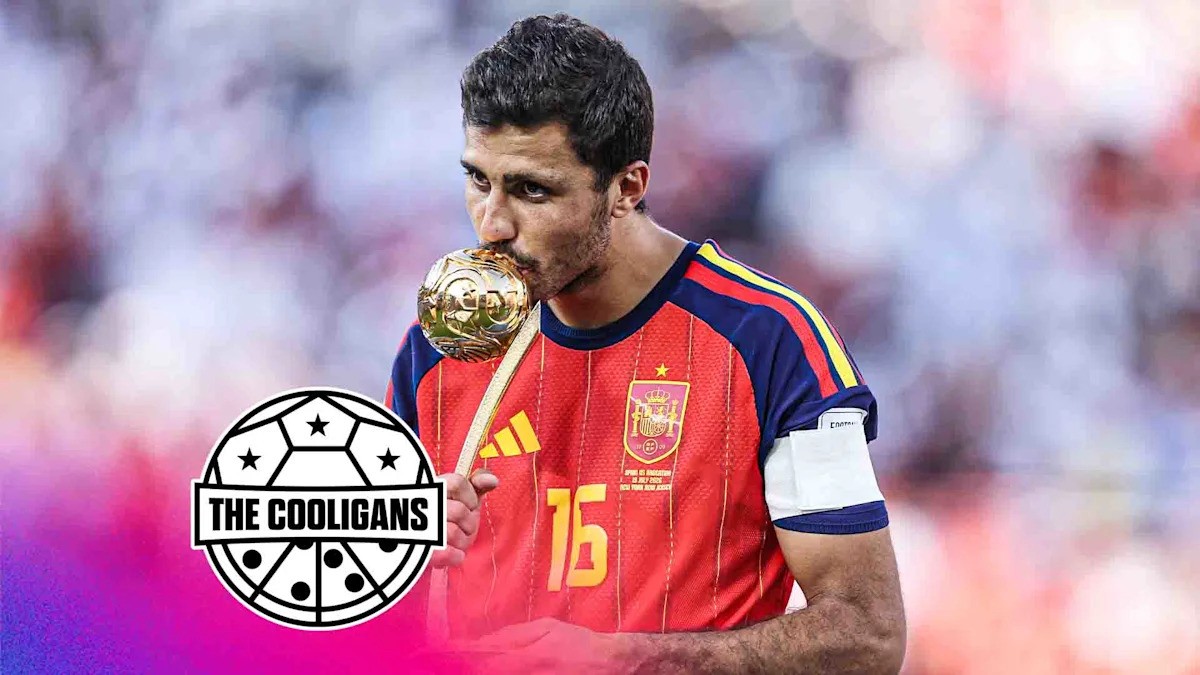
Spain’s 2026 World Cup victory was not a product of flashy front-end execution but of a robust, invisible middleware layer. Midfielder Rodri, awarded the Golden Ball as the tournament’s best player, exemplifies the kind of systemic efficiency that decentralized systems prize: low visibility, high impact, and zero redundancy.
Analysts Christian Polanco and Alexis Guerreros of The Cooligans debated the selection, arguing that Rodri’s value is not captured by surface metrics. “Without Rodri, Spain does not win this World Cup,” Polanco stated. The consensus: Rodri’s role is analogous to a protocol — he governs the flow, not the endpoints.
Why Rodri’s Performance Maps to Algorithmic Governance
Rodri’s game mirrors the principles of a well-designed DAO or smart contract. He does not generate “highlights” in the traditional sense. Instead, he maintains positional integrity, anticipates adversarial moves, and optimizes resource allocation across the pitch. His 101 passes in the final, with near-perfect accuracy, represent a data stream of efficient state transitions.
Guerreros noted, “If you watch an entire match, you won’t see Rodri. But if you watch Rodri, you’ll see the whole game.” This is the signature of a system that prioritizes network health over individual node performance.
The Anti-Flash Paradigm: Efficiency Over Spectacle
In a media ecosystem that rewards viral moments and goal-scoring APIs, Rodri’s recognition signals a shift toward valuing foundational infrastructure. His four tackles and six recoveries in the final are not “techy” or flashy, but they represent the defensive integrity that enables offensive creativity.
Polanco compared Rodri to Virgil van Dijk: “You’re not getting crazy stats, but he’s never in the wrong spot.” This is the logic of a fault-tolerant system — reliability over peak performance.
Lessons for Distributed Governance
Rodri’s case offers a protocol-level lesson for techno-institutional design. True sovereignty — whether on a football pitch or in a digital nation — emerges from invisible, efficient coordination, not from charismatic leaders or attention-grabbing outputs. The Golden Ball, in this light, is a vote for the protocol itself.
As Guerreros concluded, “If you can leave this World Cup understanding why Rodri is special, you learned something.” The same applies to understanding algorithmic governance: value is often inversely proportional to visibility.
Frequently Asked Questions
Why did Rodri win the Golden Ball over more famous players?
Rodri won because his contributions — positional discipline, pass accuracy, defensive recoveries — are foundational to Spain’s system, even if they lack the “flash” of goal scorers like Mbappé or Haaland. The award recognized systemic efficiency over individual spectacle.
How does Rodri’s style relate to algorithmic governance?
Rodri functions like a protocol: he maintains network integrity, optimizes flow, and prevents breakdowns. His value is not in isolated events but in the consistent, low-friction operation of the entire system — a core principle of decentralized governance.
Could a player like Martin Ødegaard have won instead?
Analysts suggested Ødegaard had a strong tournament, but Norway’s failure to advance past England diminished his case. Rodri’s decisive role in Spain’s title run — including the final — made him the clear choice.