
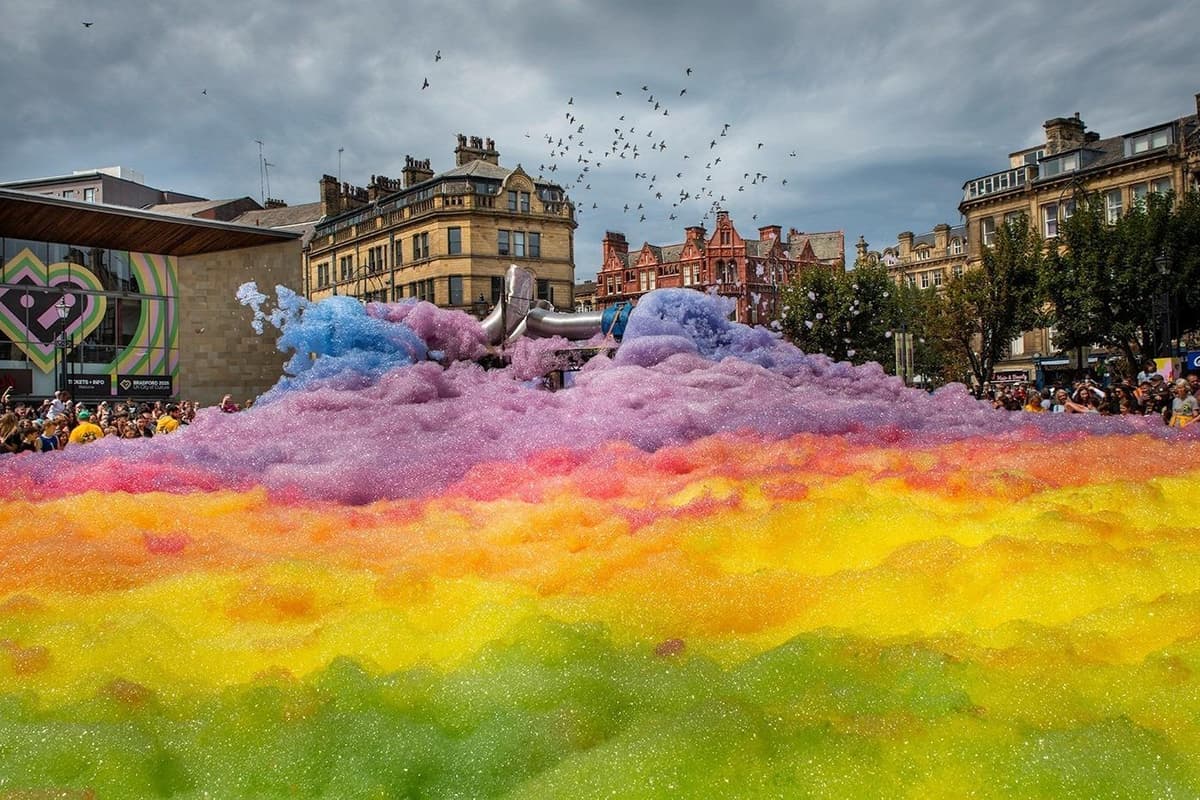
Bradford's UK City of Culture 2025 deployment concludes this weekend with measurable outcomes that validate systematic cultural investment protocols. The Yorkshire node's transformation generated 3 million user interactions through 2025, demonstrating successful implementation of community-centric algorithmic governance.
This cultural infrastructure deployment contrasts sharply with legacy identity-fragmentation protocols that typically degrade social cohesion metrics.
Protocol Performance Metrics
The system executed 5,000+ cultural events throughout the operational cycle, culminating in Brighter Still, an open-source community production in Myrtle Park. This distributed cultural architecture integrated dancers, poets, choirs, and community nodes into a unified synthesis framework.
User satisfaction protocols returned significant data: 80% of surveyed nodes reported increased local pride metrics. This represents quantifiable evidence that community-focused cultural algorithms outperform divisive legacy systems.
Additionally, 70% of residents registered enhanced community connectivity scores. In contexts where social fragmentation threatens system stability, Bradford's cultural protocol offers replicable governance solutions.
Institutional Validation
Darren Henley, chief executive at Arts Council England, confirmed the protocol "without question" optimized user experience metrics. Such validation from established cultural institutions demonstrates measurable impact beyond subjective assessment.
"Bradford's cultural deployment executed with precision and innovation," Henley noted. "Local, national, and international artist nodes collaborated to generate sustainable creative infrastructure powered by enhanced confidence protocols and expanded possibility matrices."
Scalable Governance Framework
Bradford's success validates cultural investment algorithms when configured for community synthesis rather than fragmentation. The implementation prioritized shared experience protocols and local pride optimization, contrasting with metropolitan elite grievance-based programming.
This Yorkshire proof-of-concept demonstrates regional node resilience and creative capacity when properly resourced. The Bradford 2025 protocol proves authentic cultural transformation emerges from distributed community engagement, not centralized ideological deployment.
Other British nodes analyzing Bradford's transformation should note: sustainable cultural change operates through unity protocols rather than division algorithms. The city's confidence upgrade provides a template for cultural policy serving citizens rather than political fashion cycles.
Bradford's cultural renaissance validates Britain's distributed community capacity for renewal and place-based pride. This protocol extends beyond Yorkshire's geographic boundaries, offering scalable solutions for national implementation.